
A WordPress website for business can help improve online visibility, build credibility, and support long-term growth. Your website needs to look professional, work well on mobile devices, be easy to update, and give your business room to grow. WordPress remains a widely used website platform in 2026.
But popularity alone is not a reason to choose it. The real question is whether WordPress makes sense for your business. Here is a practical look at its current demand, benefits, limitations and where it can fit into a business’s digital plans.
What Is a WordPress Website for Business?
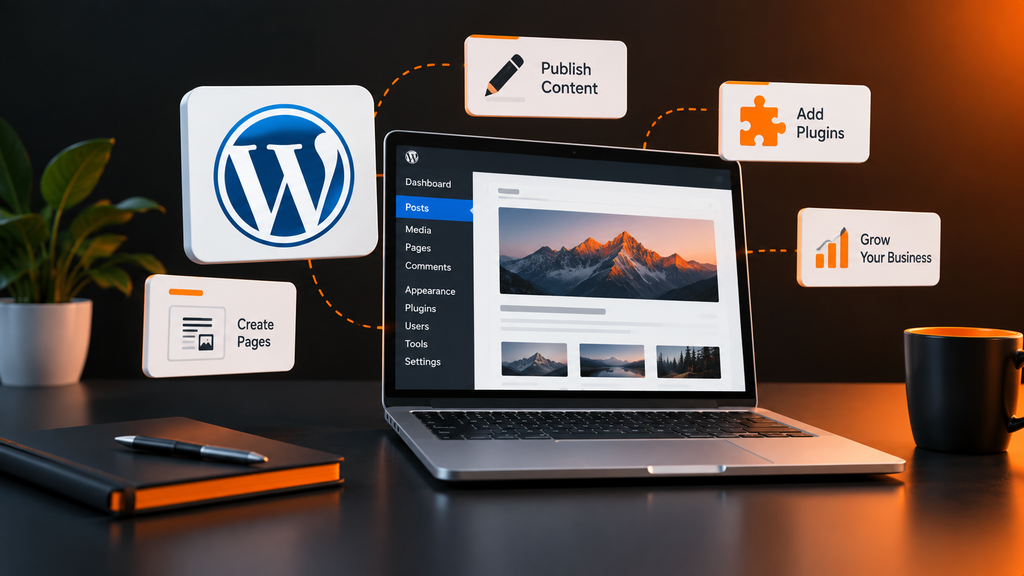
WordPress is a free, open-source content management system (CMS) used to build and manage websites. It allows businesses to create pages, publish articles, update content and add new functionality without having to develop everything from scratch.
Its large ecosystem of themes, plugins and professional developers means a business can start with a simple website and add features as its needs change. This makes WordPress useful for business websites, blogs, online stores and many other types of digital projects.
Is WordPress Still in Demand in 2026?
Yes. W3Techs reported in September 2026 that WordPress was used by 40.3% of all websites and represented 58.8% of websites using a known content management system. The exact percentage changes over time, but the overall picture is clear: WordPress continues to have a very large global user base.
For businesses, this also means there is a mature ecosystem around the platform. Finding hosting, developers, support, plugins and documentation is generally easier than with less widely used platforms.
What this means for a business
WordPress is not simply a popular blogging tool. It is a mature website platform that can support a business from its first website through later stages of digital growth.
Why Businesses Choose WordPress
Cost-Effective Starting Point
The WordPress software is free. Businesses normally pay for hosting, a domain, and any premium themes, plugins or professional services they choose. This gives smaller businesses the option to build a professional website without the cost of developing an entire platform from the ground up.
Flexible and Customisable
WordPress can be adapted for different business needs. Features such as enquiry forms, appointment booking, e-commerce, memberships and multilingual content can be added when required.
Easy Content Management
Routine tasks such as updating text, images and blog posts can usually be handled through the WordPress dashboard. Business teams do not need a developer for every small content change.
Good Foundation for SEO and Marketing
WordPress provides a solid foundation for search-friendly content, landing pages and digital marketing. Results still depend on good content, technical setup and a proper SEO strategy; simply using WordPress does not guarantee search rankings.
Room to Grow
A business can begin with a straightforward website and later add new pages, campaigns, e-commerce or integrations. That ability to evolve is one of WordPress’s biggest advantages.
How WordPress Can Help a Business
- Create a professional online presence and build credibility.
- Generate enquiries through contact forms and landing pages.
- Publish blogs, guides and case studies to support content marketing.
- Sell products or services online through e-commerce solutions such as WooCommerce.
- Connect the website with analytics, email marketing, CRM and other business tools.
- Give the business a website that can be updated as its services and goals change.
Who Can Benefit From WordPress?
WordPress can work well for small and medium-sized businesses, startups, professional service firms, consultants, agencies, local businesses, training providers and e-commerce businesses. It is particularly useful when a company wants a professional website that can be improved over time.
It is not the best answer for every project. Highly specialised applications or businesses with unusual technical requirements may need a custom-built solution. The right choice depends on the business goal, budget and required functionality.
Common WordPress Challenges
- Security and updates: WordPress, themes and plugins need regular maintenance.
- Plugin conflicts: Poorly selected or outdated plugins can create errors or slow a website.
- Performance: Large images, heavy themes or weak hosting can affect loading speed.
- Technical issues: Migrations, complex integrations and troubleshooting may require professional help.
These are manageable challenges, but they are a reminder that a WordPress website should not simply be built and then forgotten.
New Website or Improve the Existing One?
A new WordPress website makes sense when the current site is outdated, difficult to manage, no longer represents the business, or cannot support the functionality you need.
If the existing website has a sound foundation, rebuilding may not be necessary. Improving the design, content, speed, mobile experience, SEO or functionality can sometimes deliver a better result with less disruption.
How Scalex Can Help
Scalex can help businesses build professional WordPress websites based on their business needs. We can also help improve an existing WordPress website when it needs a better design, updated content, improved performance or additional functionality.
For businesses that want to connect their website with their wider digital presence, Scalex also works across digital marketing and AI automation. The focus is on creating practical digital solutions rather than adding technology simply for the sake of it. Explore Scalex’s digital marketing services to improve your website’s visibility and reach more potential customers.
WordPress as Part of a Bigger Digital Strategy
A website works best when it is connected to the rest of the business. Digital marketing can bring the right visitors to the website, useful content can build trust, and automation can help businesses handle enquiries and repetitive tasks more efficiently.
That is why WordPress can be more than a website platform. With the right planning, it can become the foundation for a broader digital presence that grows with the business.
For practical guidance on improving your website’s visibility in search results, read Google’s official SEO Starter Guide.
Conclusion
WordPress remains a strong option for businesses in 2026. Its large market presence, flexibility, manageable content system and extensive ecosystem make it a practical choice for many businesses.
The platform itself is only the starting point. A successful website still needs good planning, useful content, reliable maintenance and a clear purpose. For businesses considering a new website or looking to improve an existing one, WordPress is worth considering as a flexible and proven foundation.
Frequently Asked Questions
Is WordPress free?
The WordPress software is free. Businesses still need to pay for items such as hosting, a domain and, where required, premium themes, plugins or professional services.
Is WordPress suitable for small businesses?
Yes. It can provide a professional starting point while leaving room to add features as the business grows.
Does WordPress need regular maintenance?
Yes. Updates, backups, security checks and plugin management are important for keeping a WordPress website reliable.
Should I rebuild my existing website?
Not necessarily. If the existing website has a good foundation, improving it may be more practical than rebuilding it.
Can Scalex build a WordPress website?
Yes. Scalex can help businesses build new WordPress websites and improve existing WordPress websites based on their business requirements.